Today’s Contemplation: Collapse Cometh CCXXVI–
We’re Saved! Hydrogen Energy.
There exists a variety of justifications surrounding the potential of using a hydrogen-based energy system to play a much larger role in supporting human societies and their array of complexities and growth. As seems typical, the claims made by the energy industry and supporters of such an energy system don’t appear to be as straightforward and certainly not as beneficial as marketed.
I will begin this Contemplation with an overview of what exactly hydrogen energy is and isn’t, and then explore a variety of aspects that need to be considered with respect to any evaluation as to whether a hydrogen-based energy system is a useful path to pursue–or not.
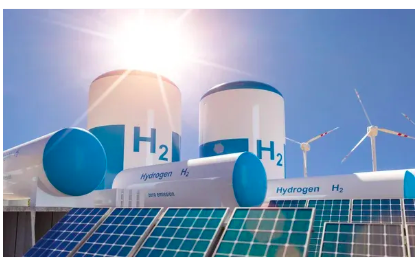 depositphotos.com
Hydrogen Energy
First, it is extremely important to clarify that hydrogen-based energy is not a primary source of energy such as coal. It is a medium that can store energy produced by other sources and then deliver it to be used. Think of hydrogen as a battery into which one can place energy and then retrieve it when needed. From a narrow end-use perspective, its only waste product is water vapour and this is why many argue its use can help to clean up and decarbonise the energy sector.
Production and Energy Input
While hydrogen is the most abundant element in the universe, it doesn’t tend to occur in its molecular form on our planet. Hydrogen must first be ‘produced’ before any hydrogen-based energy system can begin. It’s during this production (where significant energy inputs are required to break apart chemical bonds to create H2 molecules) that the energy it is to carry is ‘transferred’ to the hydrogen molecules.
The environmental impact of a hydrogen-based energy system thus depends greatly on what process is used to generate the energy-carrying hydrogen, and the industry has colour-coded the various types that it produces. But, as we will discover below, the environmental impacts don’t stop and start with how hydrogen is produced and the energy it carries is input. The story is much more complex–as are all stories that involve energy production and use.
‘Green hydrogen’ is considered the ‘gold standard’ because it is viewed as completely carbon-free. Its production is via ‘carbon-free renewables’ such as solar photovoltaic panels and wind turbines. Blue hydrogen, the next step down in the ‘clean hydrogen’ narrative, is produced from natural gas by a process called steam methane reforming; its carbon emissions are minimised via carbon capture and storage (CCS). Gray hydrogen (that makes up approximately 95% of today’s supply) is also made from natural gas but is very carbon intensive as there is not any CCS involved. There also exists turquoise (via methane pyrolysis), pink (via electrolysis using nuclear power), and other types of hydrogen ‘energy’ based on emerging methods of hydrogen production.
 Typical click-bait site post
Storage and Transportation
One of the first challenges to overcome after hydrogen’s production is its storage and transportation. Hydrogen is light with a low energy density by volume and very difficult to store and move.
There exist three methods of storage, all of which are very energy-intensive: compression of hydrogen gas into high-pressure tanks; liquefaction at extremely low temperatures (-253°C); or, binding with appropriate chemicals or other materials to serve as a hydrogen carrier. Pros and cons accompany each of these approaches.
Transportation methods depend upon the distance and quantity of hydrogen to be moved. Most of today’s hydrogen is transported via pipelines or tube trailers in its gaseous form over short distances. Longer distances tend to use specialised tankers for its liquid form, or specialised ship containers for chemically-bound hydrogen.
Energy Conversion
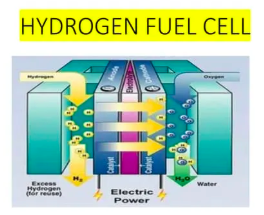
Once stored and transported to its destination, hydrogen must be converted back to a usable energy form. The primary method for this is a hydrogen-fuel cell where it is mixed with oxygen to produce heat, water, and electricity to power vehicles, industries, and buildings. Hydrogen can also be burned directly in turbines for electricity generation or within engines to power heavy machinery or ships.
In applications where batteries aren’t ideal (i.e., limited space and/or weight concerns) hydrogen seems particularly well-suited, especially heavy transport. It can also be used as a fuel where high heat is required, such as ‘green’ steel production, or as a chemical feedstock for fertiliser.
As a carrier of energy, hydrogen is marketed as a great means of storing excess energy produced from ‘carbon-free renewables’. It is then available at a later time in order to help stabilise the electricity grid. And while its direct burning can serve as a fuel for heating, it is actually more efficient to burn hydrogen gas to produce electricity for heating.
 slideshare.net
Benefits
Hydrogen energy advocates highlight its many advantages: produces only water vapour at its point of use; is versatile in being useful for power generation, heating, and as an industrial feedstock; with its high energy density by weight, it is better than batteries for weight-sensitive applications such as heavy transportation vehicles; can store energy for very long periods of time unlike batteries; and, when produced ‘cleanly’, reduces dependency upon hydrocarbons and can serve to help ‘decarbonise’ society.
What’s not to love?
Well…
 CLICK HERE
If you’re new to my writing, check out this overview.
Hurdles and Difficulties
The challenges and disadvantages of exploiting hydrogen as an energy carrier are not insignificant, but rarely if ever raised by those who are marketing it or have come to believe it is the next energy ‘saviour’. These difficulties run the gamut from economic to energetic to safety. And then, of course, there exist significant finite material and mineral needs.
Economics
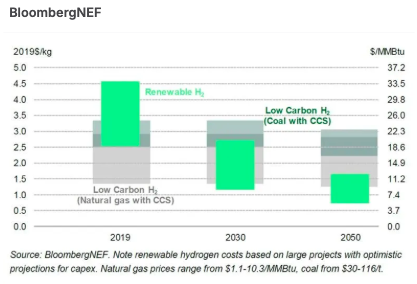
From an economic perspective, a hydrogen-based energy system is prohibitively expensive. The bulk of this is caused by the need for a massive new infrastructure to be created if it is to be used beyond small-scale, experimental, and/or prototype applications.
First, the production of hydrogen is significantly expensive, especially when one considers the ‘green’ ideal (i.e., via ‘renewables’) that receives the greatest headlines but constitutes a miniscule portion of the current market (less than 3%). The far less expensive (and much ‘dirtier’) ‘gray’ option dominates, negating the supposed ‘clean and carbon-free’ argument. Add on top of this the concerns about how resources could become a limiting factor since the ‘green’ option requires massive ‘renewable-energy’ inputs and significant amounts of water, placing a strain on local environments. Then there’s the hugely expensive electrolysers required for the production of ‘green’ hydrogen.
Additionally, materially-adequate production, transportation, storage, distribution, and fuelling infrastructure must be constructed from scratch. This requires significant funding, especially given all the materials are specialised for leak prevention and metal embrittlement reduction. Storage, for example, requires specialised high-pressure compression tanks or energy-intensive liquefaction facilities. When transported, very specialised vehicles or pipelines are a must. And then there are the supply bottlenecks and limits as rare minerals are required for the production of these specialised materials.
When one tallies up the balance sheet from all the processes and necessary infrastructure to support it, it makes little to no economic sense. Without significant government subsidies (primarily via debt expansion), there is no economic argument to support it. Given the huge upfront investment costs, the lack of actual demand, and the uncertainty surrounding the ability to meet material requirements, it should be viewed not as an investment risk but as an investment sink.
 blogs.worldbank.org
Energetics
The energy-return-on-energy-invested (EROEI) is not great for hydrogen. In fact, from a thermodynamic point of view, it’s abysmal. Depending upon the type considered and the processes involved, it actually consumes as much or more energy than it produces because of the energy losses along its life cycle. Some analysts actually argue that the losses are so great that such a system makes absolutely no sense.
A study examining hydrogen EROEI along several avenues found that ‘green’ hydrogen via electrolysis had an estimated EROEI of ~0.51; (235 megajoules (MJ) of energy required to produce a single kilogram of hydrogen, and only produced 120 MJ of usable energy). The study also found that the EROEI is even worse when producing hydrogen from hydrocarbons (the predominant form, making up 95% of current use), estimated at ~0.126 (66.75 MJ of energy inputs using diesel returned only 8.4 MJ of hydrogen fuel). These are net energy losses: more energy is being put into the process than is gained by carrying it out.
These numbers are low because of energy losses during: production (e.g., electrolysis is about 70-80% efficient, meaning a 20-30% loss of energy from the start); compression and storage (e.g., high pressurisation or cooling for liquefaction lead to another 10-15% loss); reconversion to electricity via a fuel cell (an additional 40-60% loss); and, then there are the embodied energy costs of the infrastructure.
Combined, these energy losses are why some studies conclude that a hydrogen-energy system is a consumer of energy, not a producer of it (see this). If it has any value at all, it may be as a storage medium or specialised fuel for niche applications and where energy loss is considered acceptable. The concern that such a system diverts energy output to fuel its own cycle rather than providing net energy for society is quite valid given the above evidence.
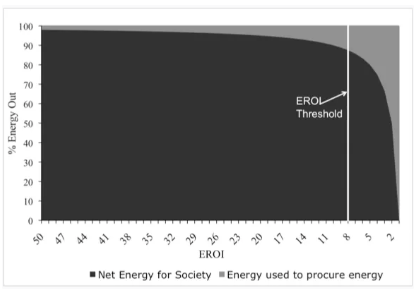
And then there are the concerns raised by some that an EROEI of more than 14 is required to maintain our societies’ many complexities (see this) and 3 just to survive at a minimal level (see this). The EROEI for hydrogen just won’t cut it; not even close.
 theoildrum.com
Safety
Hydrogen exhibits unique chemical and physical properties that raise a number of safety concerns. These need to be ‘managed’ via adequate engineering, design, and strict safety protocols.
Hydrogen is exceedingly flammable and ignites easily with very low energy. Even in air, concentrations can be as low as 4% for it to become flammable. It is difficult to contain given its molecule is the smallest of any element, so it can leak through the tiniest of gaps that would otherwise contain other gases. Hydrogen is both invisible and buoyant, with its flame being close to undetectable visually in daylight and capable of accumulating in poorly ventilated spaces. Materials exposed to hydrogen can become embrittled and prone to cracking–a critical issue for any pipelines or storage tanks.
Storage
If a gas storage tank is compromised in any way (e.g., embrittlement), the high-pressure gas (5000-10,000+ psi) can result in catastrophic tank failure. Any leaks of the highly flammable gas could lead to a jet fire. Storing as a liquid (-253°C) requires constant monitoring as any vapourisation can result in an overpressure explosion. Severe cryogenic burn risk is also possible.
Transportation and Pipelines
While it has been proposed, the use of natural gas pipelines to transport hydrogen is exceptionally risky. Hydrogen accelerates embrittlement and metal fatigue increasing the chance of failure and leaks, especially since it is the smallest gaseous element. If blended with natural gas, additional risks emerge such as the potential for separation and altered combustion properties for users.
As energy analyst Alice Friedemann writes here: “No container can contain hydrogen for long. Use it or lose it. Hydrogen is the Houdini of elements, the smallest of them all, and will boil off and escape no matter how many gaskets and valves there are on a container and at every pipeline junction.” She argues that it is little more than irrational optimism to believe that the storage and transportation of hydrogen can be performed economically or safely at scale.
Fuel Cells and Refuelling
Multiple hazards become concentrated at refuelling stations or where fuel cells are used. Refuelling stations require high-pressure storage facilities and fuelling connectors where leaks are possible. Leaks can result in a vapour cloud that can explode. The fact that hydrogen flames are invisible pose a further risk, especially for workers and/or first responders when accidents do occur. (For a dramatic Hollywood version of what might occur where fuel cells are present, watch the 2008 James Bond movie Quantum of Solace; and see this.)
Prevention and mitigation of risks require strict protocols and unique material engineering. Ignition sources need to be eliminated and not simply minimised. Leak detection systems must be robust. Embrittlement-resistant materials have to be used. Extensive ventilation (especially at high points) is necessary. Ultraviolet and infrared flame detectors should be installed. Extensive training and standards must be in place as well as very specific emergency procedures.
Infrastructure
As mentioned above, a massive new infrastructure is required for producing, storing, transporting, and dispensing of hydrogen. And this is on top of the massive infrastructure required to produce the hydrogen and generate the energy to ‘store’ in it, such as solar photovoltaic, wind turbines, or natural gas. In effect, this doubles (or more) any infrastructure expenses and material/mineral needs.
Hydrogen does absolutely nothing with respect to replacing other energy systems and their infrastructure. Hydrogen actually compounds energy-system infrastructure and complexity. An energy-generation system (i.e., natural gas turning turbines, solar photovoltaic panels) with all its infrastructure is first required. To this is added an entirely new hydrogen infrastructure of production facilities, storage systems, transportation systems, distribution facilities, and fuelling stations.
The primary reason hydrogen-based energy has been pursued for niche applications only is because direct electrification is less expensive, more efficient, and not as materially-/minerally-intensive (leaving aside for the moment the storage option of batteries).
 Another click-bait site post
Infrastructure Needs of ‘Green’ Hydrogen
The ultimate ‘ideal’ and the one typically sold to the public and advocated for is the use of ‘green’ hydrogen. As described earlier, it is based on the use of ‘renewables’ for hydrogen production and energy input. Its ultimate appeal is through the carbon-tunnel vision perspective where ‘renewables’ are ‘clean’ and ‘carbon free’. Recent estimates point to this type of hydrogen energy making up only about 1-3% of the current hydrogen market.
Perhaps one of the primary reasons for such low uptake of this version of hydrogen energy is the massive infrastructure needs. There are four distinct layers required.
The first is the ‘renewable’ energy infrastructure itself. The wind farms. The fields of solar photovoltaic panels. The grid connections from all these non-renewable, renewable energy-harvesting technologies. To produce ‘green hydrogen’ at scale, massive renewable capacity dedicated exclusively for the task is required.
Then there are the gigawatt-scale electrolyser facilities that must be constructed with access to large amounts of water and massive amounts of electricity (from the ‘renewables’ above). The hydrogen storage and transportation infrastructure is then required. Dedicated hydrogen pipelines or the retrofit of existing natural gas ones. Liquefaction facilities for cooling hydrogen to 253°C and specialised cryogenic tanker trucks. And if binding with other matter to transport, chemical plants for this process and specialised containers and tanker ships, as well as appropriate import and export terminals.
The final layer is the one necessary for end-use distribution and fuelling. It consists of stations with high-pressure compressors for transportation vehicles and specialised pipeline connections for industry.
If the above sounds just a bit materially- and minerally-intensive, it is. Massively so. Each of these layers add costs in terms of resources and administration. There are not only the needs of the non-renewable, renewable energy-harvesting technologies (i.e., solar photovoltaic panels, wind turbines), but the hydrogen production, storage, and distribution technologies.
While requiring massive amounts of material not currently constrained (e.g., steel, nickel, aluminum), some types of electrolysers, for example, do demand minerals that are quite expensive (e.g., platinum, palladium), that face critical bottlenecks (e.g., iridium), or are rare-earth elements (e.g., yttrium, lanthanum). Hydrogen fuel cells also require platinum-based catalysts.
Beyond the critical minerals needed, massive amounts of more conventional materials are required for storage and transportation. This includes construction of liquefaction plants, specialised steel pipelines, and high-strength carbon fibre composites for high-pressure tanks.
From an economic perspective, a hydrogen-based energy system only works if less expensive energy systems are not available. This is why hydrogen energy systems have only found use in very niche applications such as where long-term, seasonal energy storage is needed (e.g., storing excess energy from solar photovoltaic panels during the summer and then using it in the winter for heating), or for fuelling heavy-duty transport where batteries are impractical due to their size, weight, and charging times.
More importantly, each of the above infrastructure layers result in energy losses. As the previous section on Energetics highlights:
“Combined, these energy losses are why some studies conclude that a hydrogen-energy system is a consumer of energy, not a producer of it… that such a system diverts energy output to fuel its own cycle rather than providing net energy for society is quite valid given the above evidence.”
Those who advocate for a hydrogen-based energy system buildout counter all the above ‘hurdles’ with what has become a kind of standard rallying mantra for emerging energy technologies: innovation, a circular economy that recycles everything, supply chain diversification, and strategic deployment will ‘solve’ these ‘temporary’ difficulties.
 linkedin.com
Additional Thoughts
Carbon Capture and Storage
I won’t say much here about carbon capture and storage (CCS) since it is fodder for a future We’re Saved! Contemplation. It is the supposed cornerstone of ‘blue hydrogen’ but for all intents and purposes this is another in the growing list of false technological solutions being bandied about by the energy industry. Rather than being helpful, it is yet another resource sinkhole whose benefits are shouted from the hilltops but in actuality has–in spite of billions of dollars already being poured into it–delivered no significant success to date. (See this, this, this, and/or this)
Hydrogen as a ‘Clean’ Fuel
Obviously, none of the above is ‘clean’. The various infrastructures that would be needed to support a hydrogen-based energy system require massive extraction of material and minerals as well as refining and industrial production. As much as the end-use may indeed only produce water vapour, there are significant ecologically-destructive processes required before hydrogen is ever dispensed to a consumer.
And even for the ‘green hydrogen’ ideal, the ‘carbon-free energy’ derived from ‘renewables’ is in addition to that already built-out for other purposes. An entirely new and massive infrastructure of solar and wind farms dedicated exclusively to hydrogen production is required.
The term ‘clean’ is derived almost exclusively through a narrow keyhole perspective that can only see the end user and the water vapour created, but is blind to all that comes before. The exceedingly complex and massive hydrocarbon-fuelled: extraction and refinement of various materials and minerals, and industrial production of the components for all the infrastructure. To say little about the land use changes and water requirements. The ecological destruction that occurs in the wake of all of this is lost behind the curtain that the marketers and supporters erect in their fervor to sell a dramatically oversimplified narrative of ‘clean and sustainable energy’.
 sketchplanations.com
Blind Spots
Similar to virtually every technological ‘solution’ put before humanity to address our ecological degradation and resource depletion predicaments, a hydrogen-based energy system is ‘blind’ to a variety of impediments, limits, and negative consequences The carbon-tunnel vision mentioned above, for example, and its narrow perspective that ignores all the other planetary boundaries leads to a faulty interpretation of the broader impacts of a hydrogen-based energy system. Resource depletion and the biogeophysical limits of what is and what is not possible also gets hidden from view.
These blind spots mislead. They allow one to believe a hydrogen-based energy system is ‘clean’ and ‘sustainable’. But when one removes the blinders and takes in the larger picture and its complexities, one should be able to see the forest for the trees. [I say ‘should’ because it seems to me that many, many people fight against the disturbing realities and prefer the comforting illusions that get perpetually put before us.]
Funding
Industry lobbies governments for funding since private equity inputs are few and far between given that it has to this point been an investment sink with little to no profit revenue to show for it. This is certainly one of the motivations for those in the energy industry to employ widespread public relations campaigns and invest money in mass marketing of the ‘benefits’ of ‘solutions’ such as a hydrogen-based energy system.
I would argue that given the evidence it is not inappropriate to ask whether this is just another ‘profiteering racket’, like so many of the energy ‘solutions’ bandied about. It is sold to the public as a ‘green solution’ to our energy and environmental predicaments; government takes on massive debt to fund it, helping to market it and spin their approach as responsible problem-solving–that aids in the legitimisation of their rule; monies get funnelled to the industry (with a lot of quid pro quo for politicians that support it); the extractive and exploitive industries–along with corporate colonisation of mineral-rich nations–continue or expand; and, little to no progress towards the ‘green utopia’ occurs except for in the stories told. But some folks are making a hell of a lot of money from these ventures.
The Less-Bad Option
Often supporters of these technological ‘fixes’ argue that we must simply choose the ‘best’ option given the circumstances—the less environmentally-damaging one. The lesser of two evils.
This, unfortunately, is a form of narrative control that closes off all other options. It constrains the choice to two ecologically-destructive industrial pathways—hydrogen-based or hydrocarbon-based—while leaving the foundational premise of perpetual growth unquestioned. The illusion of meaningful choice remains, steering capital, innovation, and public conversation squarely toward sustaining the growth machine. We are thus left debating which resource-hungry, complex ‘solution’ to pursue, while the more radical questioning of our need for ever-more complex systems is silenced.
The analogy is apt: we are arguing over which pump is best for bailing out a sinking ship, while the options of repairing the hull, lightening the load, or changing course are deemed unmentionable, outside acceptable discourse. To shift focus from chasing the perpetual growth chalice toward cultivating resilience within ecological limits is verboten. Rather than pursue demand reduction through sufficiency, localization, and community resiliency, we elevate the fantasy of endless supply substitution. The notion of halting—or, heaven forbid, degrowing and simplifying—our socio-technical complexities remains marginalized. This is not because it is infeasible, but because it fundamentally challenges status quo power structures and forces a confrontation with deep-seated fears of material sacrifice and a future that looks nothing like the mass-marketed vision of an accelerating, prosperous present.
In the end, the ‘less-bad’ option is a safe harbour for those fearing to confront the deeper, more difficult question: are these proposed technological ‘solutions’ actually solving our predicaments, or are they, in fact, exacerbating them?

Scale, Scale, Scale!
What can appear as a ‘solution’ to a perceived ‘problem’ on the surface can very quickly dissipate once the scale required to address the ‘problem’ is taken into consideration and attempted. Extremely small-scale applications and uses of specific technologies can be ‘helpful’, but once they are attempted at a larger scale the systems are overwhelmed.
I harken back to my initial We’re Saved! Contemplation on the use of hemp and bamboo where a limited and regional use of naturally-occurring biomass may address material needs in a relatively ecologically-balanced manner. But once such a ‘solution’ is necessarily industrialised to scale it up to meet significantly growing demand, the ‘balance’ is lost. The ‘solution’ has now added to the predicament of overshoot and its various symptom predicaments.
Scale is perhaps everything. So while the use of hydrogen as an energy carrier might address specific issues in specific settings, the scale of what is being proposed by many regarding its use on a ramped-up basis would–as most ‘solutions’ do–exacerbate our ecological overshoot predicament by drawing down finite resources, overwhelming compensatory sinks, contributing to further biodiversity loss, etc..
Is it All About Sustaining the Growth Monster?
Every one of the energy ‘solutions’ that get proposed appear to be an attempt to sustain/grow humanity’s social complexities, be it the economy, material consumption, governing institutions, etc.. Completely lost in the ether is not only the ecological destruction that occurs in the wake of these ‘solutions’, but the very existential threat that infinite growth on a finite planet carries with it. The anti-thesis of growth is degrowth, and few apart from some rather marginalised voices are supportive of a degrowth philosophy.
It’s not that I personally believe a pursuit of degrowth can ‘save’ large and exceedingly complex human societies at this point in our evolutionary journey, but we can’t even seem to have a serious conversation about trying to stop the digging of the ever-deeper hole we have dug ourselves into. There is a relatively large and powerful contingent of our species that is pushing for perpetual expansion. More people. More resources. More extraction. More. More. More. And these people tend to steer the narratives for society.
Forget about reversing our growth in such an environment. It would be a major coup to get the-powers-that-be to admit we have encountered (actually, overshot) limits and we need to turn our attention towards actions to mitigate the ‘challenges’ ahead. Instead, we have our ‘leaders’ doubling- and tripling-down on policies and practices that are exacerbating our dilemmas. And most humans, being what they are, tend to defer to these ‘authority’ figures. They accept with little questioning the diktats and narratives put before them.
And there are others, very well-meaning others, who are well aware of the limits and the issues-at-hand but have adopted a type of technological fetishism where the complex, material-based and energy-intensive tools we have developed can indeed aid our quest for a sustainable society at scale.
Concluding Thoughts
In the final analysis, the promise of hydrogen energy is more than a technical proposal—it is a mirror. It reflects our deepest dilemmas: our desire for a seamless, painless transition; our unshakeable faith in technological silver bullets; and, our collective inability to conceive of a future not predicated on perpetual more. The math of EROEI is a physical verdict, declaring such a system a net energy consumer. Its staggering infrastructure demands are a material reality that bumps harshly against planetary limts. The ‘clean’ label is a comforting narrative that dissolves under the weight of ecologically-destructive extraction and industrial complexity.
Thus, the hydrogen debate transcends engineering to become a profound diagnostic of our thinking. To champion it as a systemic ‘solution’ is to remain imprisoned within carbon-tunnel vision and growth dogma, attempting to solve a crisis of limits with tools that themselves voraciously consume the very resources and energy they are meant to save. It is the belief that we can innovate our way out of biophysical reality, blind to the fact that each new layer of complexity–especially via our complex industrial technologies–deepens our overshoot.
We are not saved. A hydrogen-based energy system, like so many techno-fixes, is ultimately a story we tell ourselves to avoid the harder, more fundamental story. It is a tale of sustaining the unsustainable. The inescapable conclusion is that we are not facing an energy problem to be swapped with a new carrier, but a civilizational predicament rooted in the impossibility of infinite growth on a finite planet. The first step toward genuine mitigation of our overshoot predicament is not a new round of magical thinking, but the courage to stop—to read the physical evidence before us, and to finally turn towards the conversation we have spent a century evading.
Recent and relevant articles:
Geopolitics of the Energy Transformation: The Hydrogen Factor
The Future of Hydrogen – Analysis – IEA
Reclaiming Environmentalism: Saner Responses to the Ecological Crisis – Prof Jem Bendell
Why the World Is Crazy – Charles Hugh Smith’s Substack
Venezuela: The Plan Behind the Attack. – by Ugo Bardi
#317: The triumph of the material, part one | Surplus Energy Economics
The Race to the Bottom | Art Berman
China Is Already Pulling Ahead on the Next Energy Supply Chain
Germany’s Hydrogen Dream Becomes A $9 Billion Yearly Black Hole | ZeroHedge
It Makes More Sense to Produce Hydrogen With Nuclear, Not Renewables | RealClearWire
The Green Hydrogen Hype Is Fading | OilPrice.com
Can Africa Power Europe’s Green Hydrogen Ambitions? | OilPrice.com
NIMBY Hydrogen production | Peak Everything, Overshoot, & Collapse
Hydrogen. The dumbest renewable | Peak Everything, Overshoot, & Collapse
California launches world-leading Hydrogen Hub
The problem with making green hydrogen to fuel power plants
Carbon notes #5: Green hydrogen, the “gas of the future”?
Hydrogen hopium: Storage | Peak Everything, Overshoot, & Collapse
Hydrogen hopium: green hydrogen from water | Peak Everything, Overshoot, & Collapse
The problem with hydrogen | Global Witness
Hydrogen: Future of Clean Energy or a False Solution? | Sierra Club
Can Hydrogen Fuel Power the Planet?
Hydrogen Is the Future—or a Complete Mirage
What is going to be my standard WARNING/ADVICE going forward and that I have reiterated in various ways before this:
“Only time will tell how this all unfolds but there’s nothing wrong with preparing for the worst by ‘collapsing now to avoid the rush’ and pursuing self-sufficiency. By this I mean removing as many dependencies on the Matrix as is possible and making do, locally. And if one can do this without negative impacts upon our fragile ecosystems or do so while creating more resilient ecosystems, all the better. Building community (maybe even just household) resilience to as high a level as possible seems prudent given the uncertainties of an unpredictable future. There’s no guarantee it will ensure ‘recovery’ after a significant societal stressor/shock but it should increase the probability of it and that, perhaps, is all we can ‘hope’ for from its pursuit.”
If you have arrived here and get something out of my writing, please consider ordering the trilogy of my ‘fictional’ novel series, Olduvai (PDF files; only $9.99 Canadian), via my website or the link below — the ‘profits’ of which help me to keep my internet presence alive and first book available in print (and is available via various online retailers).
Attempting a new payment system as I am contemplating shutting down my site in the future (given the ever-increasing costs to keep it running).
If you are interested in purchasing any of the 3 books individually or the trilogy, please try the link below indicating which book(s) you are purchasing.
Costs (Canadian dollars): Book 1: $2.99; Book 2: $3.89; Book 3: $3.89
Trilogy: $9.99
Feel free to throw in a ‘tip’ on top of the base cost if you wish; perhaps by paying in U.S. dollars instead of Canadian. Every few cents/dollars helps… https://paypal.me/olduvaitrilogy?country.x=CA&locale.x=en_US
If you do not hear from me within 48 hours or you are having trouble with the system, please email me: olduvaitrilogy@gmail.com.
You can also find a variety of resources, particularly my summary notes for a handful of texts, especially William Catton’s Overshoot and Joseph Tainter’s Collapse of Complex Societies: see here.
[…] is a patently false claim–as I argue in my Contemplation on hydrogen-based energy systems (see: Website Medium Substack). Simply stated, hydrogen-based energy requires massive hydrocarbon inputs. From […]